
Allein in Deutschland gibt es über 550 Bienenarten, weltweit sind es über 20.000. Um Ihnen bei der Bestimmung der von Ihnen gesichteten Biene zu helfen, haben wir diesen Bestimmungsführer für die häufigsten Bienenarten in Großbritannien und Europa erstellt.
HONEY BEES
(Apis)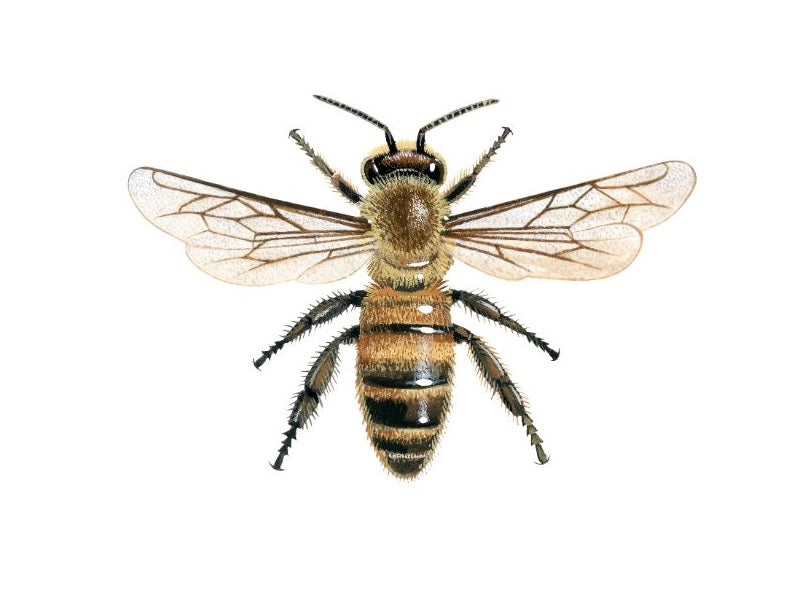
Illustration einer weiblichen Arbeiterbiene
Honigbiene
Apis mellifera
So erkennt man sie: Honigbienen haben große, behaarte Augen und unbehaarte, glänzende Hinterbeine. Ihr Hinterleib ist oft warm bernsteinbraun und schwarz gestreift oder ganz schwarz. Die Weibchen tragen Pollen in Kugeln an ihren Hinterbeinen.
Beste Reisezeit: März bis Oktober.
Wissenswertes: Nur die weibliche Honigbiene kann stechen, allerdings nur einmal. Sie besitzt am Hinterleib einen Widerhaken, der sich nach dem Stechen festsetzt und nicht ohne Verletzung oder Tod wieder herausgezogen werden kann.
BUMBLEBEES
(Bombus)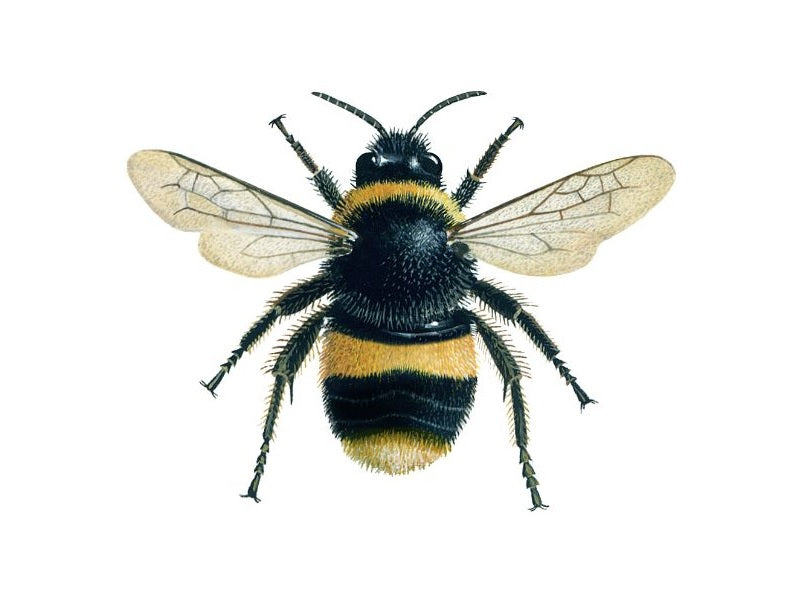
Illustration einer weiblichen Arbeiterhummel (Agave scapularis)
Braunschwanzhummel
Bombus terrestris
So erkennen Sie die Gelbschwanzhummel: Sie gehört zu den größten Hummelarten Großbritanniens und ist an ihren zwei goldgelben Streifen und dem gelblich-braunen Schwanz zu erkennen. Die weibliche Arbeiterhummel (siehe Abbildung) hat einen weißen Schwanz mit einer dezenten braunen Linie, die den Schwanz vom restlichen Hinterleib abgrenzt, während der Schwanz des Männchens braun getönt ist.
Beste Reisezeit: März bis August
Wissenswertes: Erdhummeln nisten unterirdisch in großen Gruppen von über 500 Bienen und nutzen dabei oft alte Mäuse- oder Wühlmausnester.
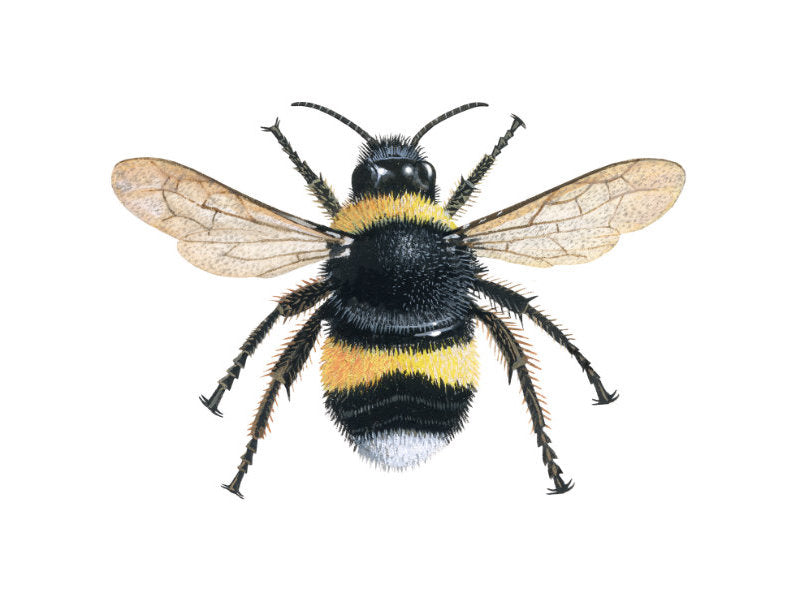
Illustration of queen white-tailed bumblebee
White-Tailed Bumblebee
Bombus lucorum
How to identify:
Often confused with the buff-tailed bumblebee, the white-tailed bumblebee is black with two bright lemon-yellow stripes and a bright white tail. The males of this species have additional yellow hair on their head as well as varying amounts on their thorax and abdomen.
When to see:
March to November.
Fun fact:
Did you know that a bumblebee can travel up to 6 km per day to visit flowers? Cool huh!?
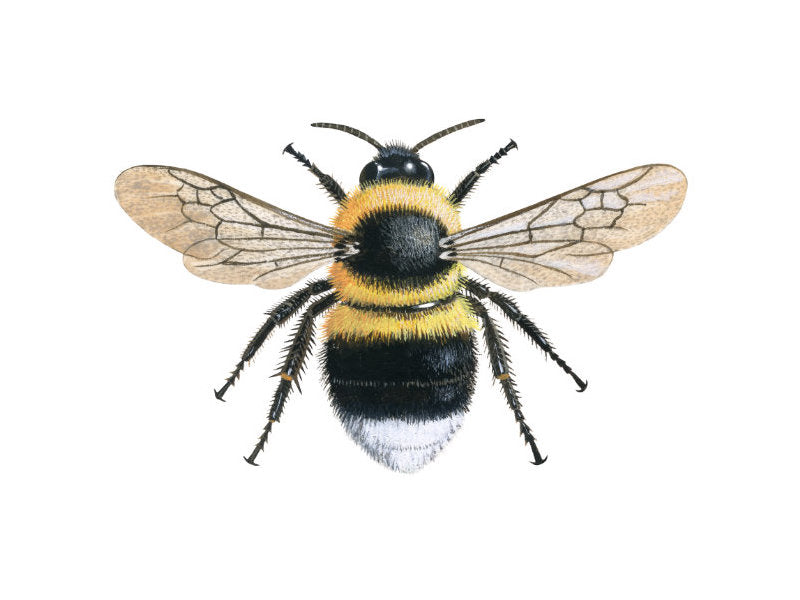
Illustration of female worker garden bumblebee
Garden Bumblebee
Bombus hortorum
How to identify:
The garden bumblebee is black with three yellow stripes. One at the front and rear of the thorax and a third at the front of the abdomen. The tail is a bright white colour.
When to see:
March to October.
Fun fact:
The garden bumblebee has the longest tongue of all bumblebees. It can stretch up to 2 cm, allowing it to reach the nectar in deep flowers such as foxgloves and honeysuckle.
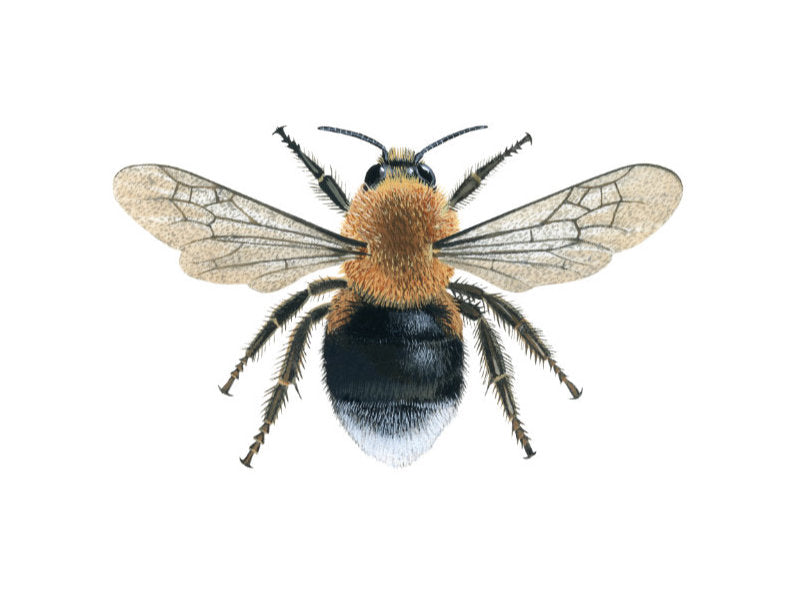
Illustration of female worker tree bumblebee
Tree Bumblebee
Bombus hypnorum
How to identify:
Tree bumblebees have a fuzzy ginger-brown thorax, with a black abdomen and white tail.
When to see:
March to July.
Fun fact:
Unlike other bumblebees, the tree bumblebee likes to nest in cavities such as holes in trees (hence the name), old bird nests, bird nest boxes and roof spaces.
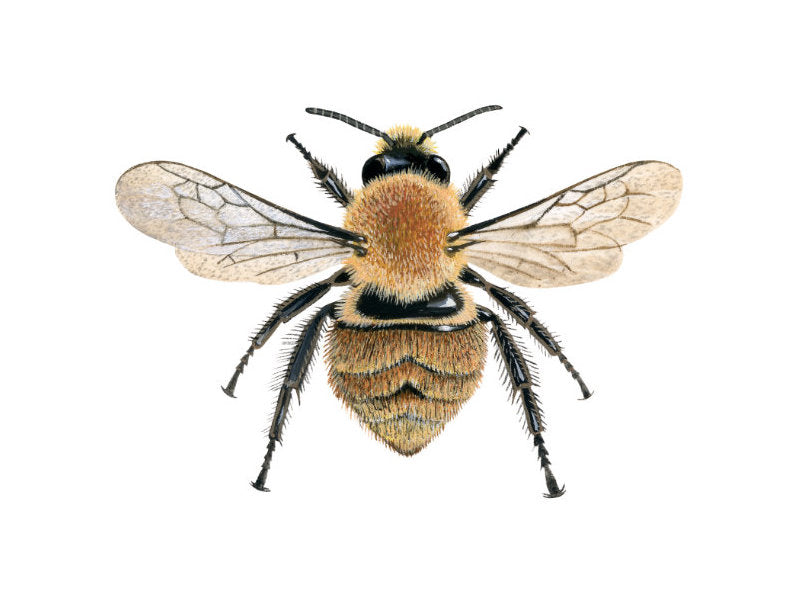
Illustration of female worker common carder bumblebee
Common Carder Bumblebee
Bombus pascuorum
How to identify:
The common carder bee is almost entirely brown or ginger, with some black hairs covering the centre of the abdomen.
When to see:
March to November.
Fun fact:
The name of the common carder bee is derived from the verb ‘to card’, describing the way in which they comb materials together to create a thatch covering for their nests.
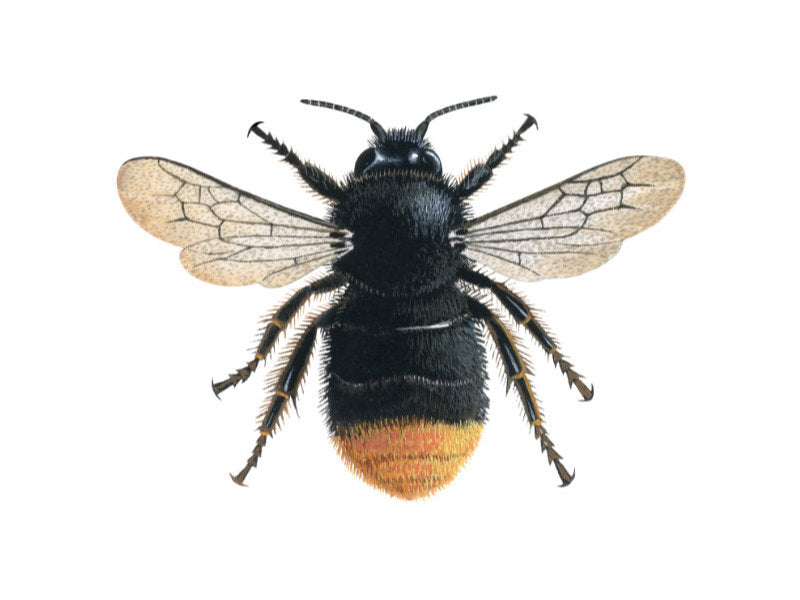
Illustration of queen red-tailed bumblebee
Red-tailed Bumblebee
Bombus lapidarius
How to identify:
Red-tailed bumblebees have a jet black body with a bright red tail which covers up to half of the abdomen. Males have bright yellow facial hair and two
slim yellow bands across the front and rear of the thorax.
When to see:
April to November.
Fun fact:
Red-tailed bumblebees, along with other types of bumblebee, are non-aggressive and will only sting if they feel threatened.
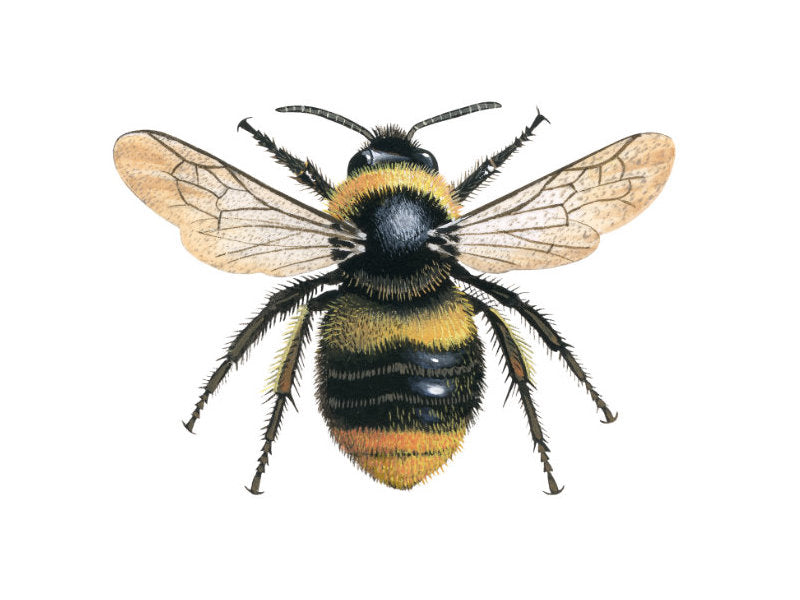
Illustration of queen early bumblebee
Early Bumblebee
Bombus pratorum
How to identify:
Early bumblebees are small, black and fluffy with a yellow band on the thorax and the abdomen, with an orange-red tail. The yellow band is usually less pronounced in the worker bees and the males have additional yellow facial hair.
When to see:
March to June.
Fun fact:
Early bumblebees are known to visit a wide variety of flowers for both their pollen and nectar and are an important pollinator of soft fruits, such as raspberries and blackberries.
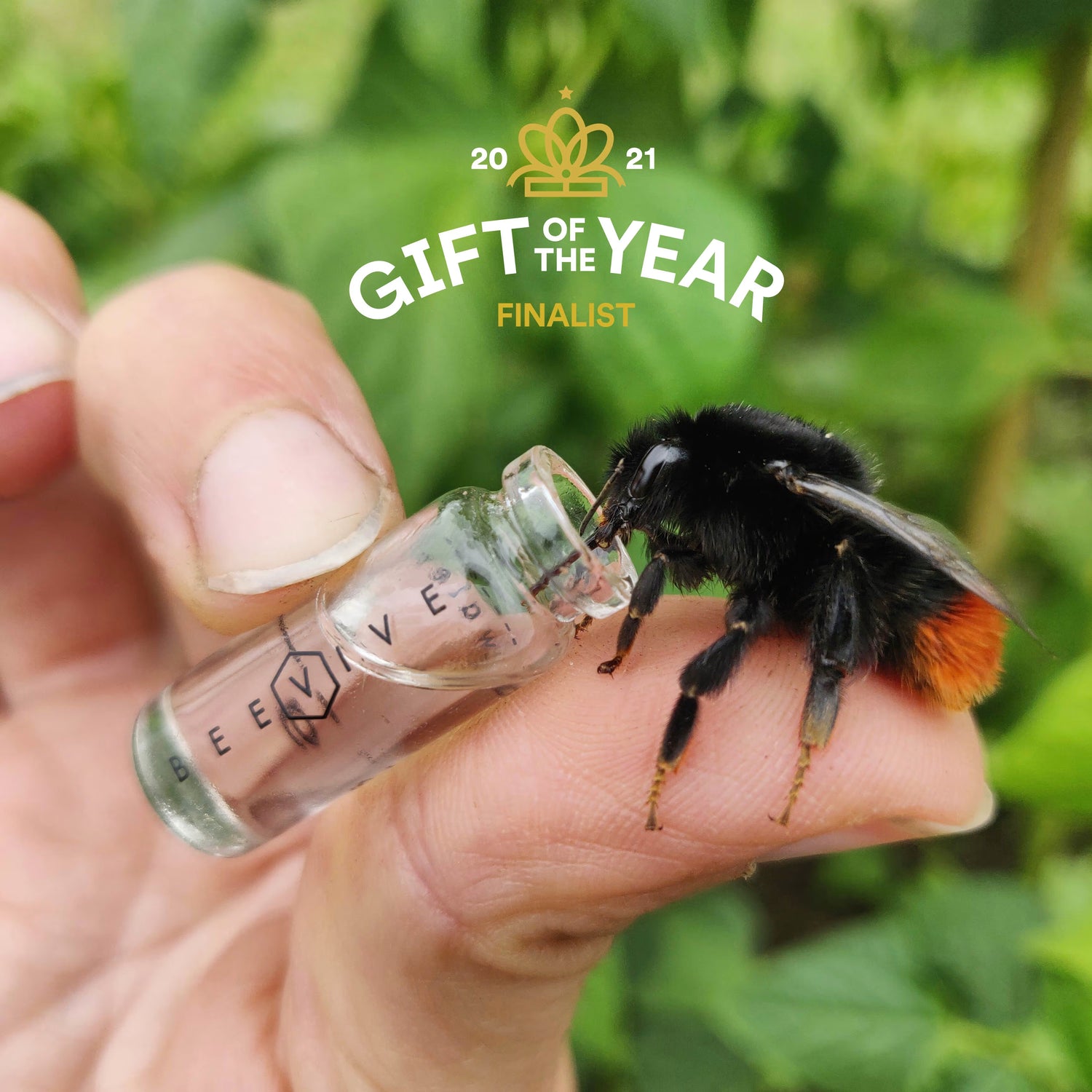
Did you know...
A well-fed bumblebee is only about 40 minutes from starvation? Once she runs out of energy, she can’t fly - and without flight, she can’t reach flowers to refuel.
Our Bee Revival Kit offers an emergency solution, to help give a tired bee a boost.
SOLITARY BEES
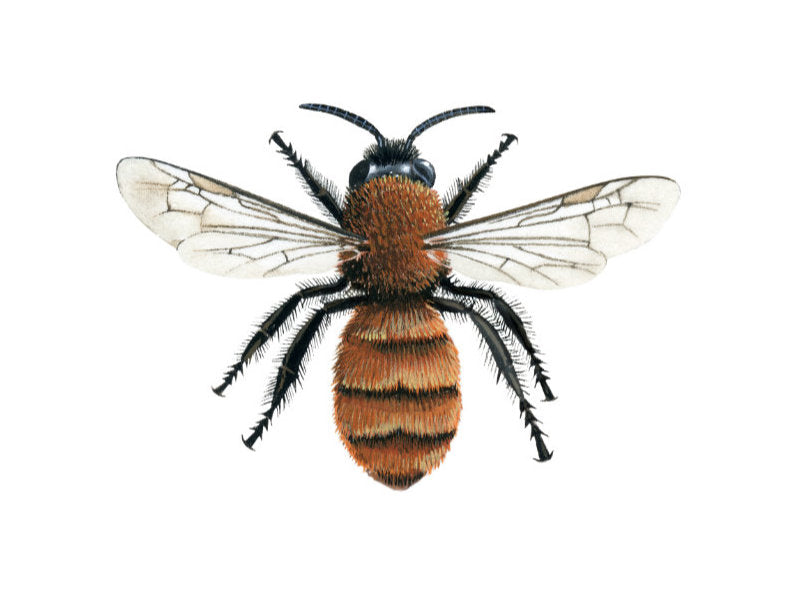
Illustration einer weiblichen gelbbraunen Sandbiene
Gelbbraune Sandbiene
Andrena Fulva
So erkennen Sie:
Die Weibchen sind an Brustkorb und Hinterleib dicht fuchsrot behaart, Beine, Kopf und Bauchseite sind schwarz behaart. Man kann sie auch dabei beobachten, wie sie Pollen an ihren Hinterbeinen tragen. Die Männchen sind kleiner.
Sie sind kleiner und weniger farbenprächtig. Außerdem haben sie weiße Haarbüschel im Gesicht, die wie ein winziger Schnurrbart aussehen können.
Wann man es sehen sollte:
März bis Juni. Eine der ersten Wildbienen, die man im Jahr beobachten kann!
Wissenswertes:
Die Braune Sandbiene ist eine häufige, im Frühling fliegende Biene, deren Flugzeit mit der Blüte von Obstbäumen wie Kirsche, Birne und Apfel zusammenfällt.
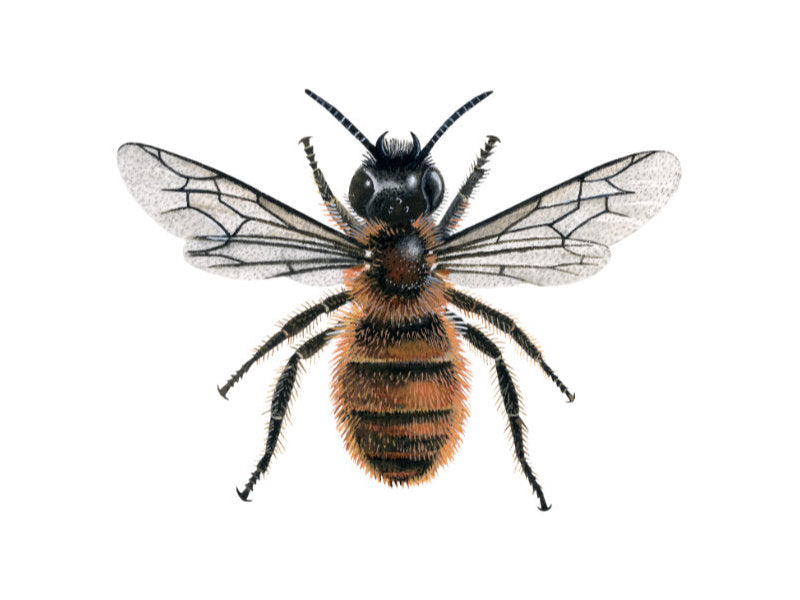
Illustration of female red mason bee
Red Mason Bee
Osmia rufa
How to identify:
Often confused with the tawny mining bee, red mason bees are small in size and have a light brown thorax and orange-red abdomen. Female red mason bees collect pollen on the underside of their abdomen.
When to see:
March to June.
Fun fact:
Red mason bees are ‘cavity nesting’ solitary bees, building nests in hollow stems and bee hotels, using mud to plug the entrance.
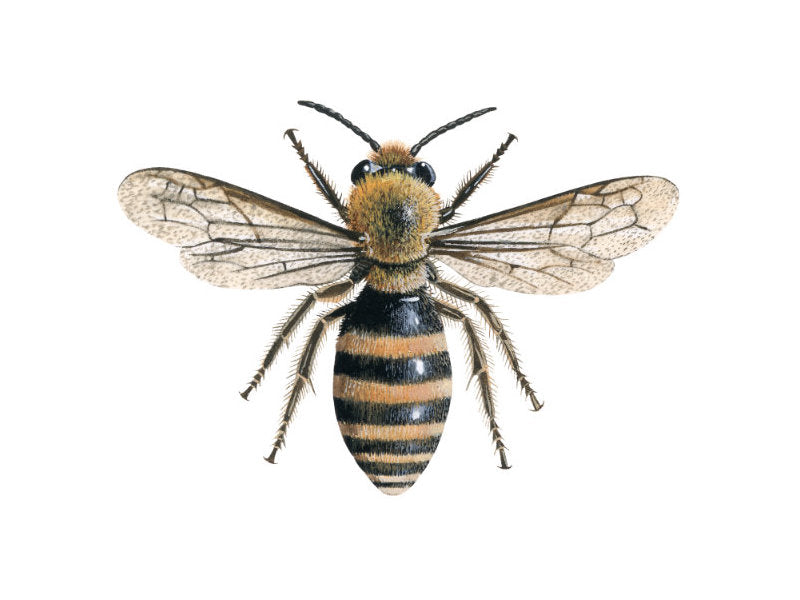
Illustration of female ivy mining bee
Ivy Mining Bee
Colletes hederae
How to identify:
Slightly larger than the honey bee but similar in shape, the ivy mining bee has a densely-haired ginger thorax and defined shiny yellow and black bands covering its abdomen.
When to see:
September to November. The solitary ivy bee is one of the last solitary bees to emerge each year.
Fun fact:
As their name suggests, the ivy bee feeds mainly on the nectar of ivy flowers when in autumn bloom.
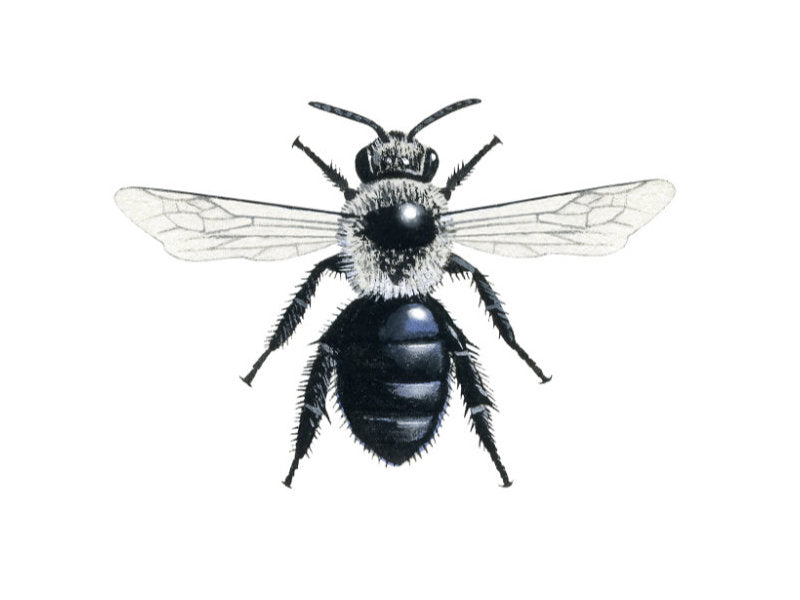
Illustration of female ashy mining bee
Ashy Mining Bee
Andrena cineraria
How to identify:
Ashy mining bees are recognisable by their striking black and ash-grey hairs that cover their dark bodies. The female and male ashy mining bees are similar in appearance, however the female is slightly larger and curvaceous with a glossier hairless abdomen.
When to see:
April to July.
Fun fact:
Ashy mining bees are not dangerous and are therefore safe to be around children and pets. In fact, solitary bees in general are non-aggressive because they do not have honey or a hive to protect.
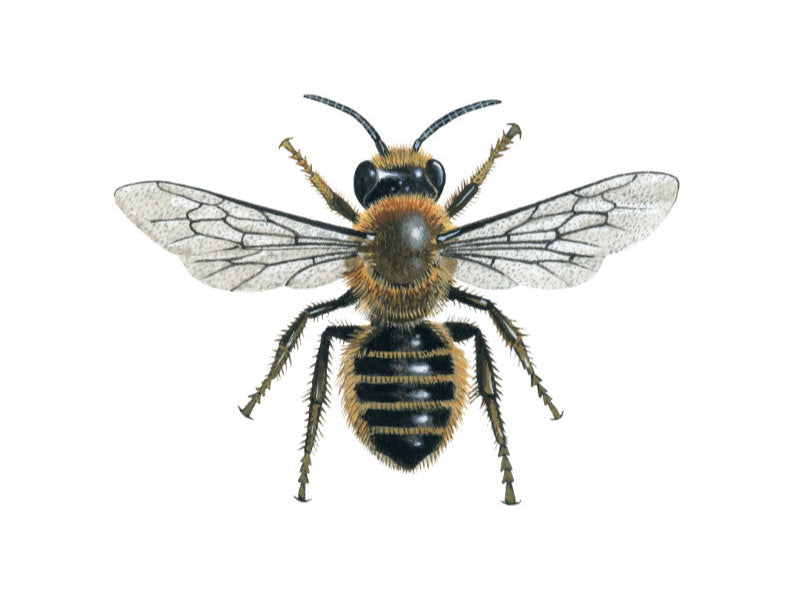
Illustration of female willoughby's leafcutter bee
Willoughby's Leafcutter Bee
Megachile willughbiella
How to identify:
The leafcutter bee is dark brown with light brownish hair around the sides of the thorax and between the abdominal segments. They have a larger head than most solitary bees due to the strong muscles they have developed to chew through leaves. They can often be found in flight with sections of leaf tucked between their legs.
When to see:
Mid-June to August.
Fun fact:
The wildflowers that leafcutter bees enjoy the most are: bell flowers, bird's-foot trefoil, thistles, brambles and herbs such as mint!
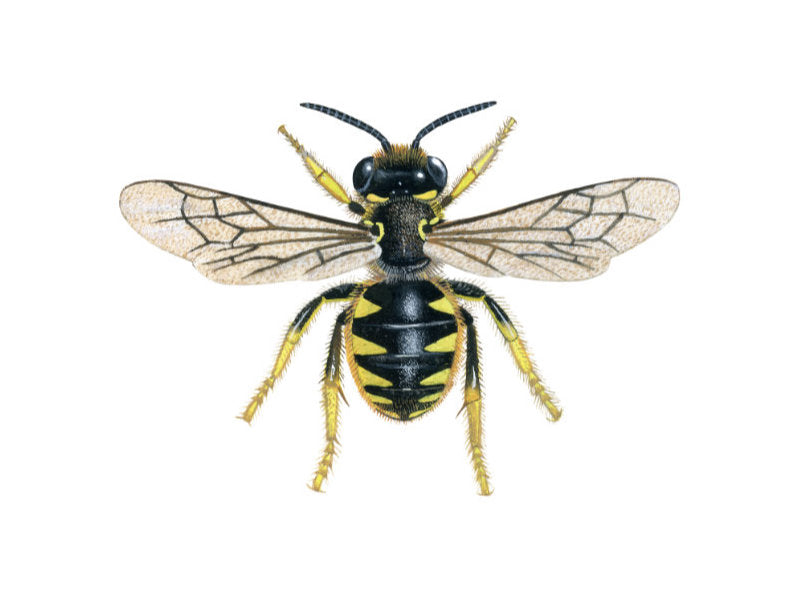
Illustration of female wool carder bee
Wool Carder Bee
Anthidium manicatum
How to identify:
Wool carder bees have unique bright yellow markings on their face and down the sides of their abdomen. These are one of the very few species of bee where the male is larger than the female. The male is also hairier and has spikes at the end of the abdomen. The female collects fibres from plants such as lamb’s-ear, and so can often be seen carrying these in silvery bundles.
When to see:
May to August, South of England.
Fun fact:
Male carder bees cannot sting, but they do have a set of threatening spikes on their tail which they use to scare away or squash any trespassers.
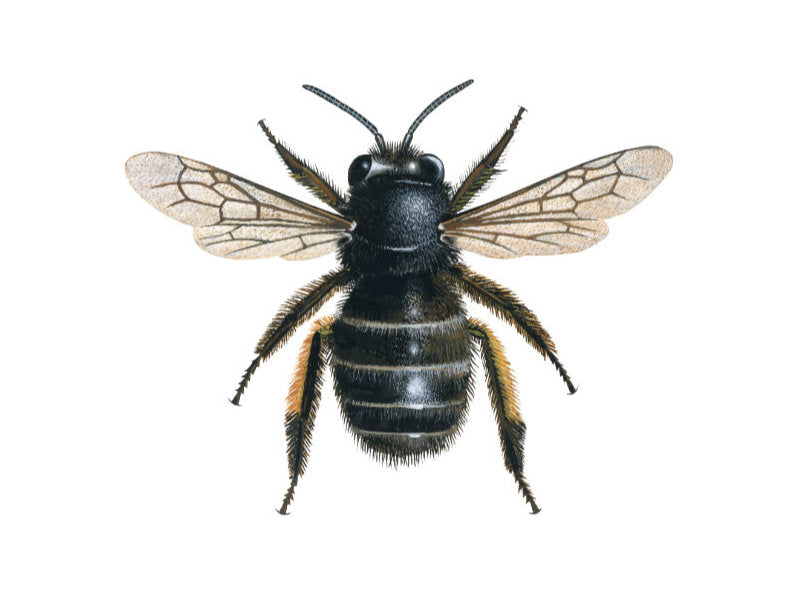
Illustration of female hairy-footed flower bee
Hairy-footed Flower Bee (female)
Anthophora plumipes
How to identify:
The female hairy-footed flower bee is dark all over with rusty-orange coloured hairs on its hind legs. They are large in size and so can often be confused with a bumblebee. The male and female species look remarkably different and therefore are easily identifiable from one another (see male identification below).
When to see:
March to May.
Fun fact:
If you have a fireplace you may find hairy-footed flower bees in your house, as newly-emerged bees can sometimes accidentally fall down the chimney!
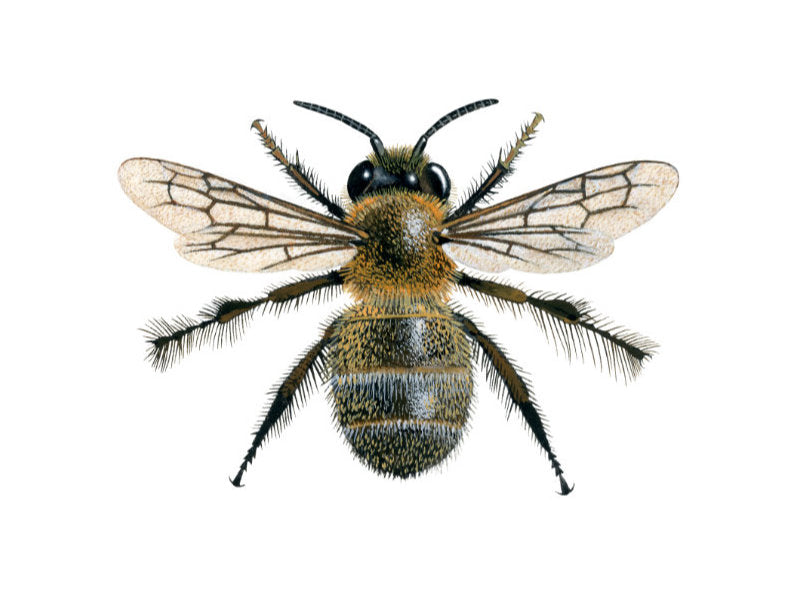
Illustration of male hairy-footed flower bee
Hairy-footed Flower Bee (male)
Anthophora plumipes
How to identify:
The male hairy-footed flower bee is buff-ginger-haired with a unique yellow lower face and distinguishing feathery hairs on its feet. The males are full of energy, and can be seen hovering and darting around female nest entrances in the soft mortar of walls and cob wall cracks.
When to see:
February to May.
Fun fact: This species is an important pollinator for early spring flowers such as lungwort.
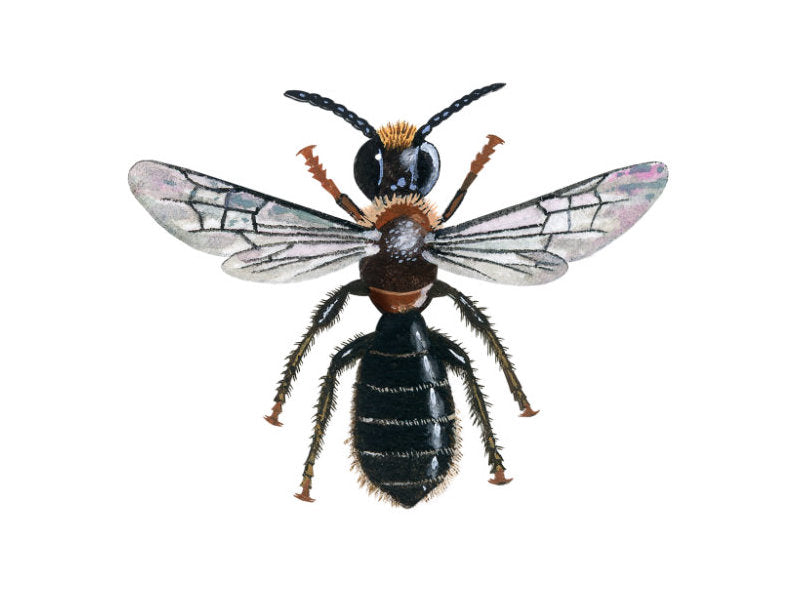
Illustration of female harebell carpenter bee
Harebell Carpenter Bee
Chelostoma campanularum
How to identify:
These are tiny, narrow solitary bees (around 6-7mm in length), and are black in colour. Due to their size and colour they can be easily mistaken for flies. However, unlike flies, they have white pollen-collecting hairs on the underside of their abdomen.
When to see:
Mid-June to August.
Fun fact:
Males use harebell flowers as ‘B&Bs’ in bad weather and often sleep in the flower overnight for several days at a time.

Illustration of female Sharp-Tail Bee
Sharp-Tail Bee (female)
Coelioxys inermis
How To Identify: Sharp-tail bees are small, dark solitary bees with a sharply pointed abdomen. They have a smooth, somewhat wasp-like appearance, boasting black and white lines across their abdomen, they lack the fuzzy pollen-carrying hairs seen on other bee species.
When To See: July to August
Fun Fact: Not so fun for other solitary bees, Coelioxys inermis belongs to a group known as cuckoo bees. The long, pointed abdomen helps the female access existing nests, which she uses to lay one egg for her developing larva.

Illustration of Blue Mason Bee
Blue Mason Bee
Osmia caerulescens
How To Identify: Blue mason bees are a small species of solitary bee, best recognised by their steely blue-black metallic sheen, which gives them their name. Females have black faces and can often be seen carrying pollen on the underside of their abdomen.
Males are harder to spot. They are usually much smaller than females (around 5–6mm) and are very fast flyers, meaning they can easily be confused with other species. Males tend to have a metallic green body and are covered in pale yellow hairs.
When To See: April to August/September
Fun Fact: Female Blue Mason bees collect pollen using their scopa rather than the hairs on their back legs. The scopa is found on the underside of the abdomen, which is why these tiny pollinators often appear to have dusty yellow tummies.

Illustration of Common Masked Bee
Common Masked Bee
Hylaeus communis
How To Identify: Also referred to as a ‘yellow-face bee’, these tiny pollinators can be identified by either white/ yellow markings visible on their face. The males tend to have more prominent markings, yet the females will also have yellow markings, usually near their eyes, both with smooth, glossy black bodies.
When To See: May to September
Fun Fact: Hylaeus species of bees are often confused with wasps, likely due to their appearance, as well as the fact that they do not carry pollen on their bodies. Rather than using pollen baskets or brushes, they carry pollen and nectar inside their body. Once back at the nest, the mixture is stored in waterproofed brood cells, it is a slightly messy, but a very clever solution!

Did you know...
The UK has lost 97% of its wildflower meadows since the 1930s - vital habitat and food for bees.
A bee hotel provides nesting sites for cavity-nesting solitary bees, including mason bees and leafcutter bees featured in this guide. They’re fascinating to observe and non-aggressive, making them safe to welcome into your garden.
WERDEN SIE TEIL UNSERER COMMUNITY
Die Beevive-Community dreht sich darum, deine Leidenschaft für Bienen, Wildtiere und Natur in Fotos und Videos zu teilen und dich mit Gleichgesinnten zu vernetzen. Hier kannst du unvoreingenommen Fragen stellen, lernen und dein Wissen teilen. Es ist einfach großartig zu sehen, wie sich unsere Beeviver gegenseitig unterstützen! Werde Teil unserer vielfältigen Community und folge uns aufInstagram , Facebook undYouTube .
Bee FAQ's
What are the different types of bees?
Worldwide, scientists estimate there are over 20,000 known bee species, including around 8 honeybee species, roughly 250 bumblebee species, and more than 19,700 solitary and other native bees. They are all crucial pollinators and commonly grouped in three main types of bees bumblebees, honeybees, and solitary bees.
What do bees look like?
A bee is a small, often striped and slightly fuzzy flying insect with transparent wings, six legs, and a body specially adapted for collecting pollen and nectar. Bees vary widely in shape, size, and colour, and are often mistaken for other insects such as hoverflies and wasps.
With over 20,000 species of bees worldwide, it can be challenging to tell the difference between bumblebees, honeybees, and other lookalike insects! You can read more on this blog.
What colour are bees and why are they black and yellow?
Most bees are typically black and yellow, although some species can also appear golden-brown, orange, white, or even metallic. For example, bumblebees are well known for their bold yellow-and-black stripes, while honeybees tend to have softer golden-brown bands.
Bees are black and yellow mainly because this colour pattern acts as a warning signal to predators. Known as aposematism, the high-contrast stripes signal to animals like birds that the bee can sting and should be avoided. Over time, predators learn to recognise and avoid these colours.
There is also a practical benefit: black absorbs heat, helping bees stay warm enough to fly, while yellow reflects some sunlight, preventing overheating. Cool huh!
What are the big, fuzzy bees called?
The big, fuzzy bees most people notice are bumblebees.
They should not be confused with carpenter bees, which are also large but less fuzzy, with shiny black abdomens, and often hover near wooden structures. Honeybees, by contrast, are smaller and less fuzzy. So, if you’re seeing something big and very fuzzy in your garden, it’s most likely a bumblebee.
How many legs, wings, and stripes does a bee have?
A bee has six legs, four wings, and typically a striped abdomen - most commonly with yellow and black bands. The exact stripe pattern varies by species, and bees come in a wide range of shapes, sizes, and colours! For example, the red-tailed bumblebee, as its name suggests, has a distinctive, beautifully fuzzy red tail, which you can spot in our guide.
How many bee species are there in the UK
The United Kingdom has around 270 species of bees, including 1 honey bee species, 24 bumblebee species, and roughly 240 species of solitary and other native bees.
How many bee species are there in the US
The United States has about 4,000 bee species, including one commonly managed honey bee species (introduced from Europe), around 46 bumblebee species, and more than 3,900 native solitary bees.
How many bee species are there in the Europe
Europe is home to approximately 1,965 bee species, consisting of one primary honey bee species, around 60–70 bumblebee species, and more than 1,800 solitary and other native bee species.